The annual Football Pride event is an initiative of the Football v Homophobia campaign.
2025
Leicester was the host city for Football Pride 2025, with LGBTQ+ people and allies from all levels of the game encouraged to turn out in support on Friday 29 August.
READ A FULL RECAP OF THE DAY HERE!
The one-day event celebrating queer culture in the game, was held at The Y Theatre in Leicester city centre.
Interested in being part of a future Football Pride? Contact jon@footballvhomophobia.com for more details, including sponsorship and partnership opportunities.

2024
Football Pride 2024 was held in London on Friday 28 June.
Building on the success of the previous year’s event in Manchester, Football v Homophobia organised Football Pride which was hosted by the Chelsea Foundation at Stamford Bridge, on the day before the annual Pride in London parade.
A packed all-day programme of LGBTQ football culture, activities and conversations was supported with networking and social opportunities.
Read more here and watch the short film below!
2023
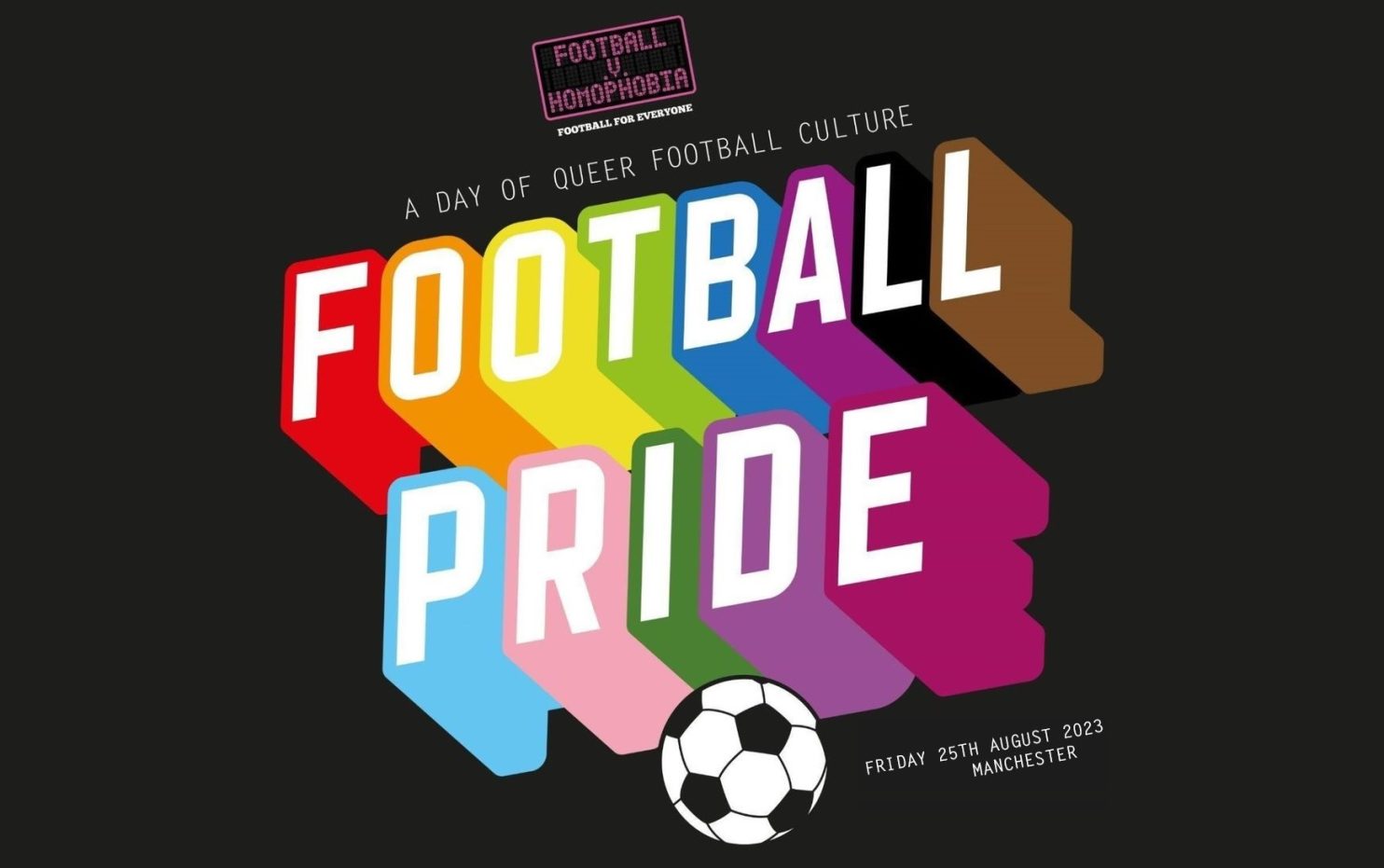
In August 2023, in Manchester, the event brought together the LGBTQ+ and ally football family, for a symposium celebrating inclusive football culture at Manchester Metropolitan University Business School.
Speakers included out gay footballer Zander Murray, FIFA and WSL referee Stacey Pearson, influencers Mikey Connor and Jake Williamson, players from TRUK United FC, plus many more players, coaches, match officials, fan group leaders and media personalities who are LGBTIQ+ or active allies.
Read our news article recapping a wonderful weekend!

2020
The first Football Pride was held as an online festival in July 2020.
Click here for a recap of what happened – watch panel discussions and interviews…
The event was virtual, held at a time when many were feeling isolated, not only from each other but also from their year-round passion. To combat this, FvH put on an online day of panel discussions, debates, entertainment and football fun.
We were excited to work with a range of partners internationally to build a diverse and engaging programme for the day.
We had four virtual ‘stages’, as well as a family zone and a fringe programme. We allocated different sessions to these virtual spaces.
As with Pride programmes in real life, participants were able to choose events and build their own menu of activities throughout the day.
Activities were delivered via a range of online platforms and included, for example, Zoom, Instagram TV, Facebook Live, Twitter, Twitch etc.
